
The global energy transition is often framed as a question of power generation, electrification, and emissions reduction. Yet beneath these visible changes lies a more fundamental challenge: access to raw materials. Lithium and other critical raw materials (CRMs) are indispensable for batteries, energy storage systems, electric vehicles, grid stabilization, and renewable technologies. Without a secure and scalable supply of these materials, the energy transition cannot advance at the pace required.
For Europe in particular, this challenge is strategic. The continent remains heavily dependent on imports of critical raw materials from a small number of regions outside the EU, creating supply-chain vulnerabilities and geopolitical risk. Regulatory initiatives such as the EU Critical Raw Materials Act clearly signal the urgency to secure domestic and sustainable sources. The unresolved question is where these materials will come from.
The limits of conventional mining
Traditional mining has long been the backbone of raw material supply, but it faces growing constraints. New mining projects require significant capital investment, lengthy permitting processes, and often face social and environmental opposition. Development timelines commonly stretch over a decade, making mining poorly aligned with the urgent time horizon of the energy transition.
While mining will remain part of the solution, it cannot meet Europe’s needs alone. To build resilient supply chains, additional sources must be developed—sources that can be deployed faster, with lower environmental impact and stronger public acceptance.
Offshore infrastructure: an overlooked resource
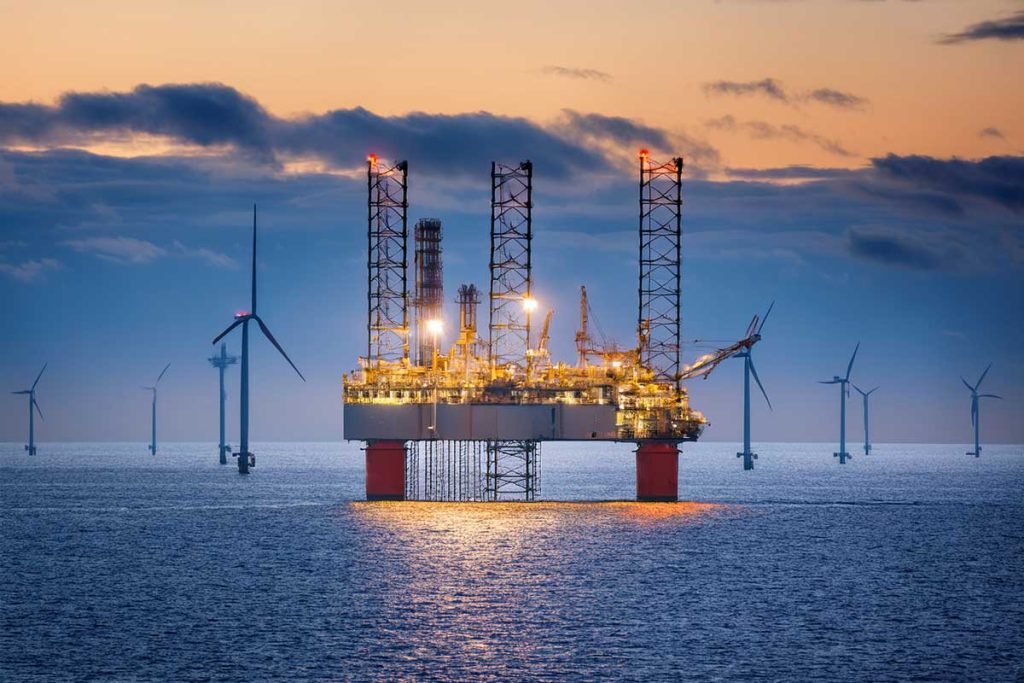
One such source already exists, largely unnoticed, within Europe’s offshore energy system.
For decades, oil and gas production has generated vast volumes of produced water—formation water brought to the surface alongside hydrocarbons. This water has traditionally been treated as a waste stream, managed to meet environmental discharge or reinjection requirements. What has received far less attention is its geochemical content.
Produced water often contains dissolved concentrations of lithium, boron, strontium, bromine, and other critical or strategic elements. In certain reservoirs, the combination of concentration and water volumes suggests a genuine opportunity for commercial recovery. Importantly, this potential can be accessed using infrastructure that is already in place.
This reframes offshore facilities not only as energy assets, but as platforms for raw material production.
Turning waste into strategic value
Extracting critical raw materials from produced water represents a shift toward circular resource use. Instead of opening new mines, operators can leverage existing wells, pipelines, and processing facilities. The advantages are compelling:
- Significantly reduced environmental footprint compared to land-based mining
- Lower capital intensity by utilizing existing infrastructure
- Shorter development timelines from evaluation to production
- New revenue streams from mature or late-life oil and gas fields
In the context of Europe’s energy transition, this approach aligns environmental responsibility with industrial pragmatism.
Why Aqua Rare Metals is part of the solution
Recognizing potential is one thing; realizing it is another. Produced water chemistry varies widely between basins and even between fields. Extraction efficiency, technology selection, operating conditions, and economics all depend on detailed geochemical understanding and disciplined project development.
Aqua Rare Metals (ARM) was established to address exactly this complexity.
ARM focuses on the identification, evaluation, and commercialization of critical raw materials from produced water. The company combines deep expertise in geochemistry, reservoir systems, and offshore operations with a strong understanding of modern extraction technologies such as Direct Lithium Extraction (DLE).
Rather than promoting a single technology, ARM applies a technology-agnostic, data-driven approach. Each project follows a structured, stepwise workflow: screening existing data, targeted sampling, laboratory analysis, pilot testing, and ultimately commercial deployment. This reduces technical and financial risk while ensuring that the chosen extraction solution is optimized for the specific brine chemistry.
By integrating CRM recovery into ongoing operations, ARM enables operators to unlock additional value with minimal disruption to existing production.
Bridging legacy energy and the future system
The energy transition is often portrayed as a clean break from the oil and gas industry. In reality, parts of this industry can play a constructive role in enabling the transition. Offshore infrastructure, operational expertise, and disciplined project execution are assets that can be repurposed to support Europe’s raw material needs.
Aqua Rare Metals operates at this intersection. By transforming produced water from a cost and liability into a strategic resource, ARM helps extend the relevance of existing assets while supporting Europe’s transition to a low-carbon economy.
Looking ahead
The success of the energy transition will depend not only on innovation in energy technologies, but on securing the materials that make those technologies possible. Offshore produced water offers a rare combination of scale, availability, and sustainability—if approached with the right expertise and methodology.
With its focused strategy, technical depth, and clear path to commercialization, Aqua Rare Metals demonstrates how offshore resources can contribute meaningfully to Europe’s critical raw material supply. The solution to one of the energy transition’s most pressing challenges may already be flowing through the pipes of existing offshore installations—waiting to be recognized and responsibly developed.